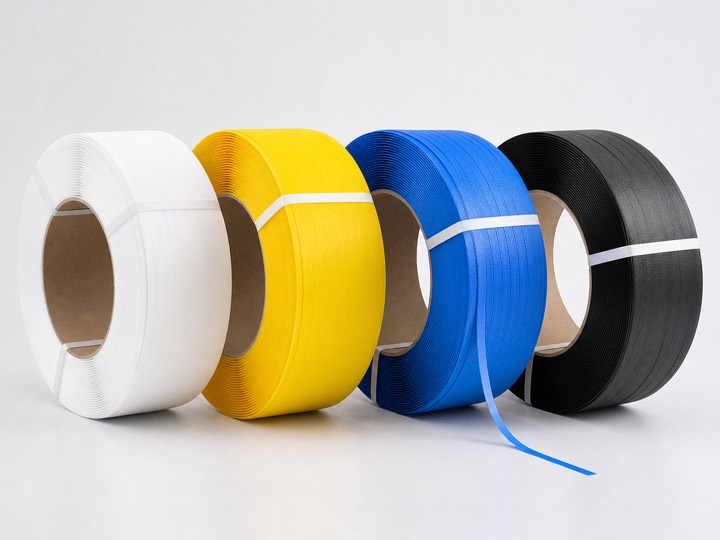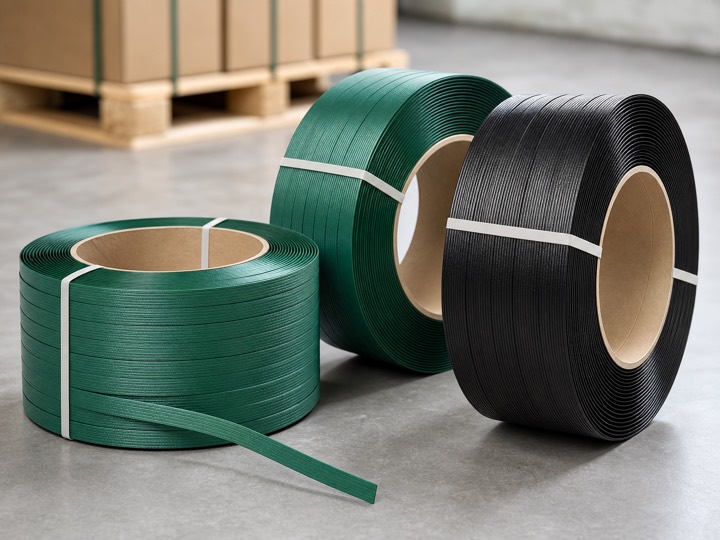
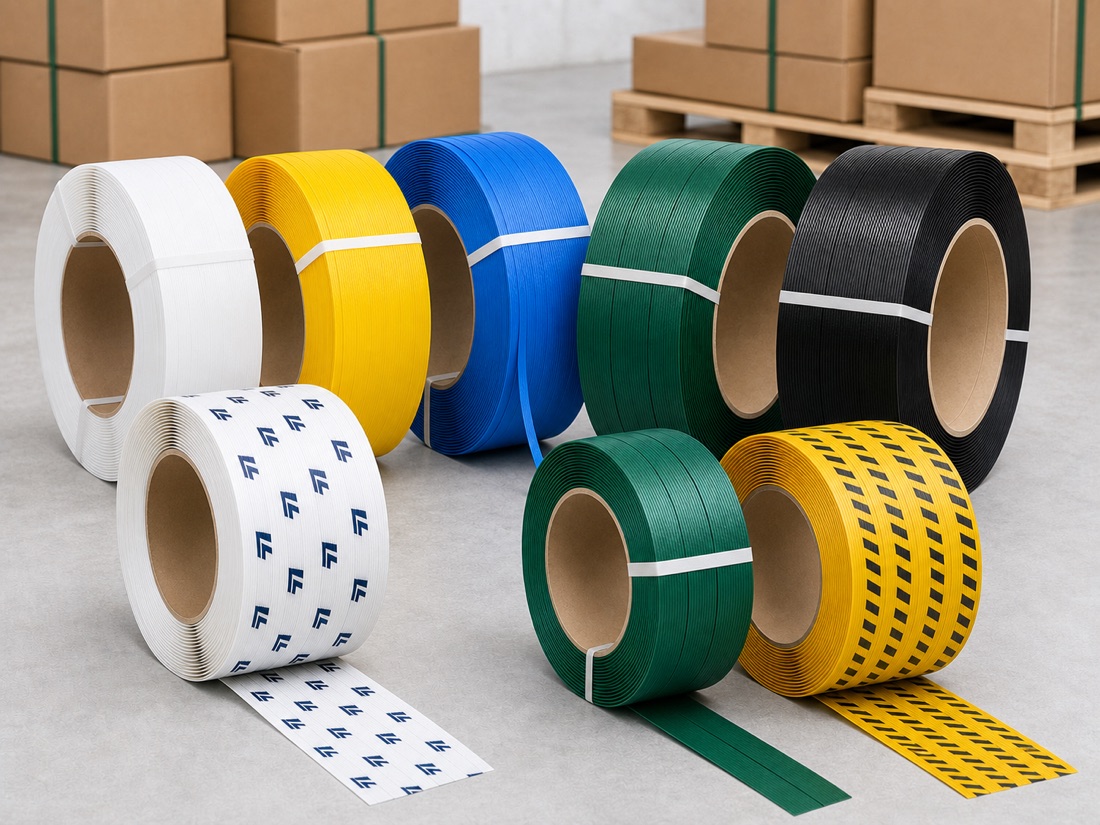
Short answer: PP strapping is a lightweight polypropylene strap for carton bundling and regular warehouse packing, while PET strapping is a stronger polyester strap for heavier pallets, export loads, and applications that need better retained tension.
PP and PET strapping are both used for carton bundling, pallet securing, and warehouse packing, but they are not the same. PP strapping is lighter and often used for cartons, lighter pallets, and general bundling. PET strapping has higher tensile strength and better performance for heavier loads, export pallets, bricks, timber, cans, and industrial goods.
When comparing parameters, do not look only at width. Check material, width, thickness, tensile strength, elongation, surface embossing, color, core size, roll length, roll weight, machine compatibility, and packing quantity. A cheaper roll may have shorter length, lower strength, or a smaller net weight, so the apparent unit price can be misleading.
For price comparison, calculate cost per meter and match it with required strength. Also compare how many meters are needed per pallet or carton, whether the strap fits your manual tool or automatic machine, and whether breakage causes extra labor cost. A slightly higher unit price can be more economical if it reduces breakage and improves packing speed.
PP vs PET strapping comparison table
| Material | PP strapping uses polypropylene. PET strapping uses polyester. |
|---|---|
| Typical load use | PP is usually selected for light cartons, ecommerce parcels, and regular warehouse bundling. PET is usually selected for export pallets, bricks, timber, cans, heavy cartons, and industrial loads. |
| Strength focus | PP is chosen for economical bundling. PET is chosen when higher breaking strength and better retained tension are important. |
| Elongation and tension | PP has more stretch for lighter packing. PET keeps tension better on heavier loads and during longer transport. |
| Tool or machine fit | Confirm whether the strap will be used with manual tools, semi-automatic machines, automatic machines, or pneumatic tools before quoting. |
| Price comparison | Do not compare roll price only. Compare cost per meter together with roll length, net coil weight, breaking strength, and packing efficiency. |
Quote checklist for PP or PET strapping
Before asking for a PP or PET strapping quote, prepare the strap material, width, thickness, required load or breaking strength, manual or machine use, smooth or embossed surface, roll length or coil weight, color, packing method, order quantity, and destination country.
- Compare width, thickness, tensile strength, roll length, and net roll weight together.
- Use PP strapping for lighter cartons and general warehouse bundling.
- Use PET strapping for heavier pallets, export loads, and stronger holding force.
- For a faster quotation, share photos of the packed goods, pallet weight, and the strapping tool or machine model.
FAQ
When should buyers choose PP strapping instead of PET strapping?
Choose PP strapping for lighter carton bundling, ecommerce packing, regular warehouse use, and semi-automatic carton strapping where the load is not very heavy and cost control is important.
Is PET strapping better for export pallets?
PET strapping is usually better for heavier export pallets because it has higher strength and better retained tension than PP strapping. It is a common choice for bricks, timber, cans, heavy cartons, and industrial goods.
Should buyers compare strapping by roll price only?
No. A lower roll price can hide shorter roll length, lower net coil weight, weaker breaking strength, or higher breakage risk. Buyers should compare cost per meter together with load strength and packing efficiency.
What information is needed for a PP or PET strapping quote?
A useful quote request includes material, width, thickness, required strength, tool or machine type, surface style, roll length or coil weight, color, quantity, destination country, and whether matching tools or machines are needed.
For related products, see our PP/PET strapping category or send a broader custom packing request through S-PACK SUPPLIES custom packaging materials.