Short answer: For custom printed courier bags, buyers should confirm bag size, PE film thickness, opacity, seal type, print area, artwork file, order quantity, carton packing, destination country, and sample need before requesting a quote. These details decide packing speed, privacy, print quality, unit cost, and freight efficiency.
Custom printed courier bags are a practical packaging choice for ecommerce brands that ship clothing, cosmetics, accessories, documents, small electronics, and other non-fragile products. A courier bag is not only an outer shipping layer. It also affects packing speed, brand presentation, parcel privacy, and customer experience.
Before placing an order, buyers should compare the bag size, material thickness, film color, opacity, sealing strip, printing method, carton packing, and purchase quantity. Getting these details right helps avoid loose parcels, broken seals, unclear printing, and unnecessary packaging cost.
Custom printed courier bag parameters to confirm
| Parameter | What to confirm | Why it matters |
|---|---|---|
| Bag size | Width, length, flap, and usable inner space | Prevents slow packing, loose parcels, and failed sealing |
| Film thickness | Light, medium, or heavy-duty PE film | Affects tear resistance, opacity, and cost |
| Opacity | White-black co-extruded film, grey, black, or custom color | Protects private products and improves parcel appearance |
| Printing | Logo, repeated pattern, full-area design, color count, and label area | Improves brand presentation while keeping barcode scanning clear |
| Seal type | Permanent adhesive, double-seal return mailer, or tamper-evident seal | Matches normal shipping, returns, or higher-control deliveries |
| RFQ details | Quantity, destination country, packing method, delivery time, and sample request | Lets the supplier quote material, printing, packing, and freight more accurately |
Start with the product size and packing method
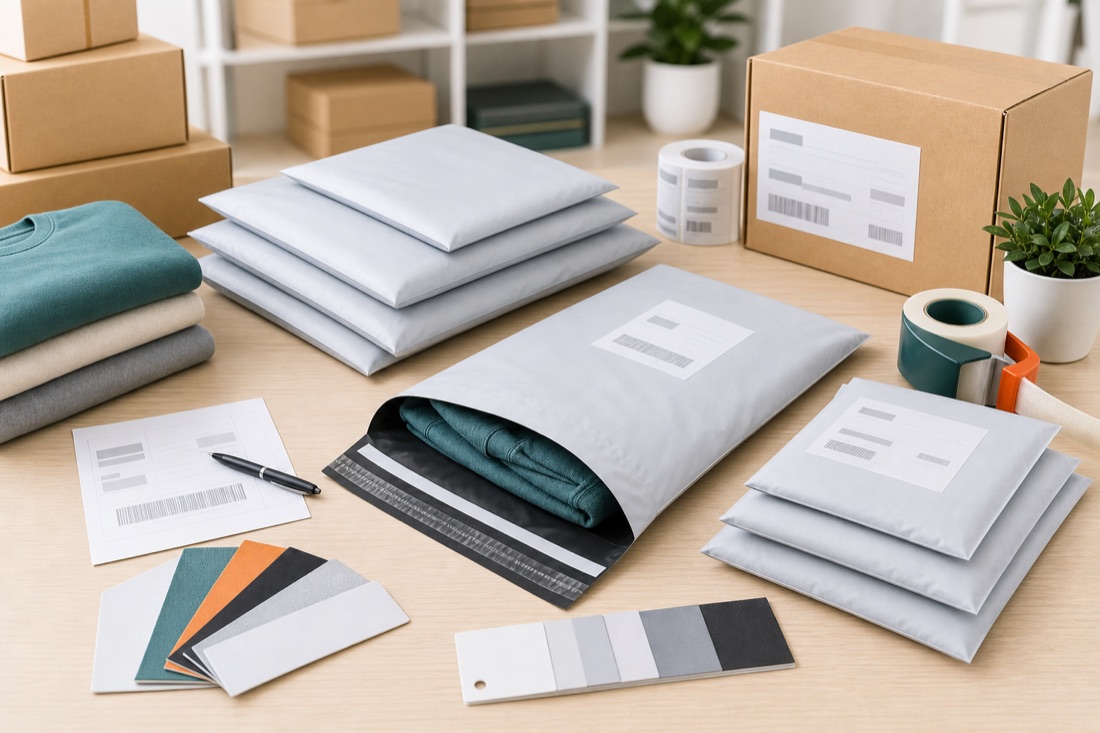
The first question is simple: what will go inside the courier bag? If the product is soft, such as clothing or textiles, the bag can be slightly tighter because the product can compress. If the product is boxed, such as cosmetics, accessories, or gift items, the bag needs extra space so workers can pack quickly without forcing the product inside.
A good courier bag should leave enough room for the product itself, inner packaging, inserts, sealing area, and shipping label. If the bag is too small, packing becomes slow and the seal may not close properly. If it is too large, the parcel looks loose and the buyer pays for extra material.
Choose the right material thickness
Courier bag thickness affects strength, privacy, and cost. Lightweight ecommerce orders can usually use thinner poly mailers, while heavier or sharper products need stronger film.
- Thin mailers are useful for lightweight apparel and soft goods.
- Medium-thickness poly mailers are suitable for general online orders.
- Heavy-duty courier bags fit shoes, boxed products, or multi-item parcels.
- Tamper-evident courier bags help protect higher-value shipments.
Thickness should not be selected by price alone. A cheaper bag may tear more easily, stretch during transport, or look less professional after courier handling.
Decide whether the bag should be opaque
Opacity is important when the product should not be visible from outside. Cosmetics, underwear, documents, gifts, and premium products usually need opaque courier bags.
Common options include white outer film with a black inner layer, grey or black courier bags, colored brand mailers, and fully printed custom poly mailers. Opaque film improves privacy and gives the package a cleaner appearance. For some ecommerce brands, this is more important than saving a small amount on material cost.
Plan the printing area carefully
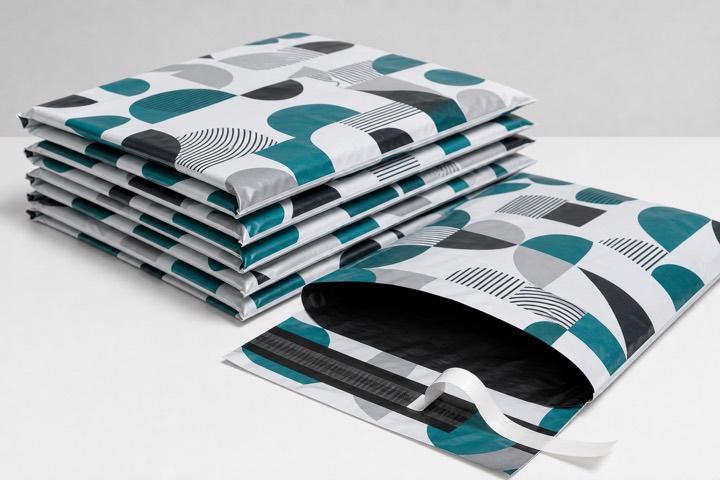
Custom printed courier bags can use a simple logo, repeated pattern, warning text, QR code area, or full-area brand design. For most ecommerce sellers, a clean logo print is enough at the beginning.
When preparing artwork, confirm the logo file format, print color, print position, front and back design, and whether full-area printing is required. The shipping label area is easy to overlook. If the design is too busy, barcode scanning may be affected, so leave a clean area where warehouse staff can apply the shipping label.
Select the seal type
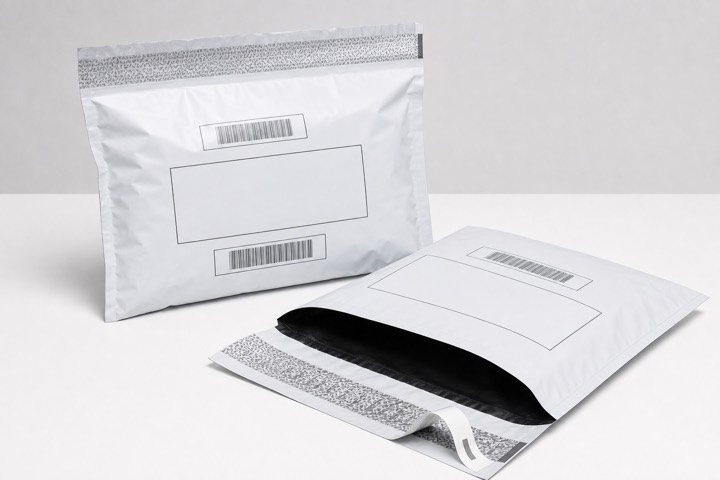
Most courier bags use a self-adhesive sealing strip. For normal ecommerce orders, one permanent adhesive strip is enough. For returnable parcels, buyers can choose a double-seal design, allowing the customer to reuse the same bag for returns.
If the product value is higher, tamper-evident sealing can be considered. This makes unauthorized opening easier to notice and can reduce disputes during delivery.
How to choose purchase quantity
Purchase quantity should depend on order volume, design stability, storage space, and campaign schedule. For a new brand or a new design, it is better to start with a controlled first order. This allows the buyer to check actual packing speed, print quality, courier handling, and customer feedback.
For stable ecommerce operations, a larger purchase can reduce unit cost, printing setup cost, and freight cost per bag. If monthly usage is predictable, buyers can calculate order quantity based on two to three months of packaging consumption.
- New design: start with a smaller trial batch.
- Stable monthly orders: plan two to three months of usage.
- Seasonal promotion: order before the campaign starts.
- Distributor purchase: compare carton quantity and freight cost together.
RFQ checklist for custom printed courier bags
Before asking for a quote, prepare the bag size, material thickness, film color, opacity requirement, logo or full-area artwork, print color quantity, seal type, order quantity, packing method, destination country, required delivery time, and sample requirement.
The clearer the RFQ information, the faster the supplier can quote accurately. To prepare a custom courier bag quote, send the bag size, material thickness, print design, order quantity, destination country, and expected delivery date.
FAQ
What details are needed for a custom printed courier bag quote?
A quote request should include bag size, PE film thickness, film color or opacity, seal type, print area, artwork file, print colors, order quantity, carton packing, destination country, target delivery time, and sample requirement.
What thickness should ecommerce courier bags use?
Lightweight apparel can use thinner mailers, general ecommerce parcels usually need medium-thickness PE film, and shoes, boxed goods, or multi-item orders need heavier courier bags. The best thickness depends on product weight, sharp edges, privacy needs, and shipping distance.
Should custom courier bags be opaque?
Opaque courier bags are recommended when products should not be visible from the outside, such as cosmetics, underwear, documents, gifts, premium goods, or branded parcels. White-black co-extruded film, grey film, black film, or custom color film can improve privacy and presentation.
Can courier bags be made with a return seal or tamper-evident seal?
Yes. Standard ecommerce mailers usually use one permanent adhesive strip. Returnable mailers can use a double-seal design, while tamper-evident courier bags are useful for higher-value parcels, documents, cosmetics, and deliveries where visible opening evidence is important.
Review the custom printed courier bag specifications or compare the broader courier bag and poly mailer range. For logo printing, artwork review, sample questions, or mixed packaging requests, send the details through the custom packaging quote form.