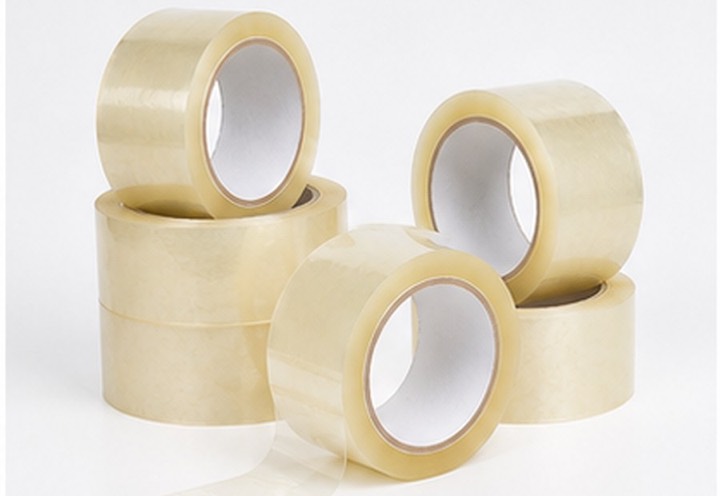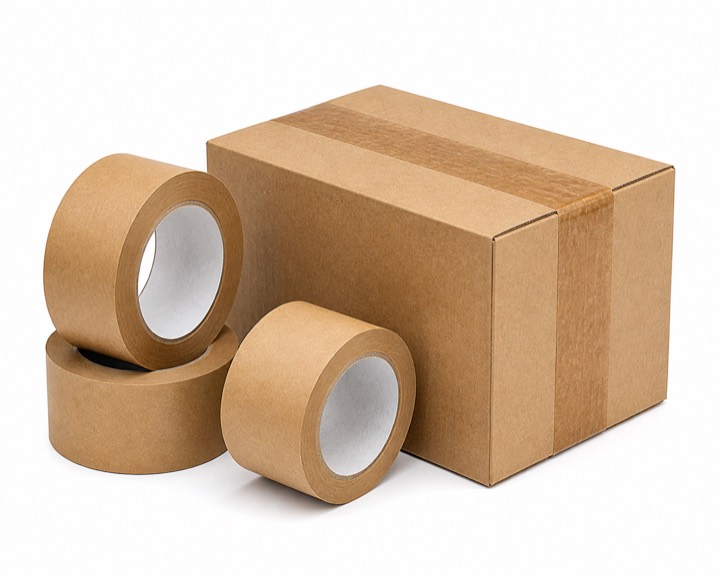
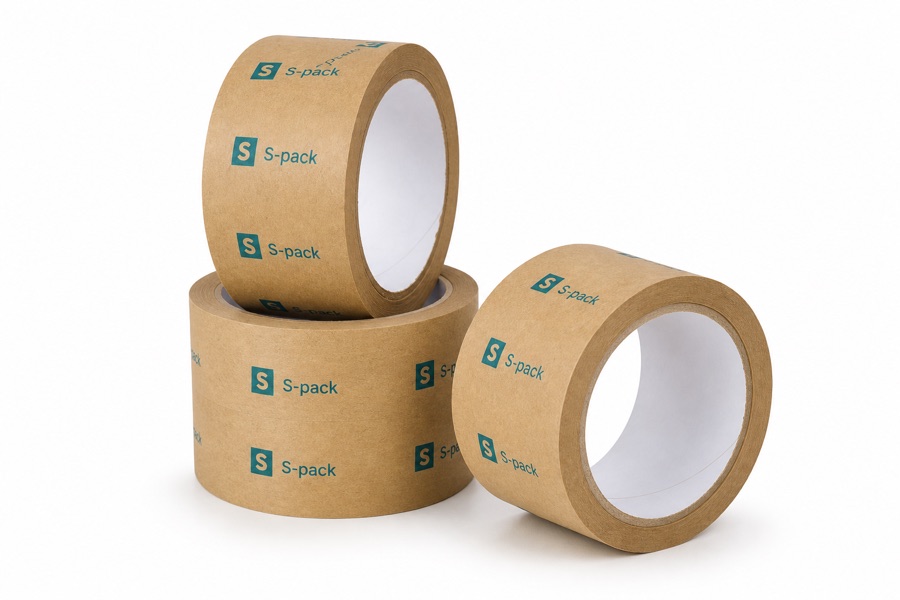
Short answer: Choose BOPP tape when packing speed, broad equipment compatibility, visibility, and cost control are the main priorities. Choose self-adhesive kraft tape when you want hand-applied sealing with a paper appearance. Test water-activated kraft tape when you need a fiber bond, clear opening evidence, or a stronger paper-based closure for corrugated cartons. The final decision should be based on the actual carton surface, packed weight, packing method, storage conditions, and transport route.
What are the three main carton sealing options?
BOPP packing tape uses a biaxially oriented polypropylene film backing with a pressure-sensitive adhesive. It is commonly applied by hand dispenser or carton-sealing machine and is available in clear, colored, and printed formats.
Self-adhesive kraft tape has a kraft paper backing and pressure-sensitive adhesive. It can be applied directly from the roll without adding water, making it useful for manual packing lines that want a natural paper appearance.
Water-activated kraft tape, also called gummed paper tape, requires moisture to activate its adhesive. When correctly applied to compatible corrugated cartons, it bonds with the paper fibers and can provide visible evidence when the closure is opened.
BOPP vs self-adhesive kraft vs water-activated kraft
| Backing and adhesive | BOPP: plastic film with pressure-sensitive adhesive. Self-adhesive kraft: paper backing with pressure-sensitive adhesive. Water-activated kraft: paper backing with adhesive activated by water. |
|---|---|
| Application method | BOPP: hand dispenser or compatible sealing machine. Self-adhesive kraft: direct hand application or compatible dispenser. Water-activated kraft: manual or powered water-activated dispenser. |
| Best starting use | BOPP: ecommerce cartons, warehouses, factories, and repeat sealing. Self-adhesive kraft: manual packing, gift boxes, natural presentation, and lower-volume work. Water-activated kraft: corrugated cartons where fiber bonding and opening evidence are important. |
| Packing speed | BOPP: usually the fastest option for established hand or machine lines. Self-adhesive kraft: convenient for manual use. Water-activated kraft: speed depends on dispenser setup, operator training, and tape wetting consistency. |
| Opening evidence | BOPP: depends on adhesive, carton surface, and closure design. Self-adhesive kraft: may show disturbance but does not automatically create a fiber bond. Water-activated kraft: can show paper-fiber damage when removed from a compatible carton. |
| Appearance and printing | BOPP: clear, colored, or custom printed. Self-adhesive kraft: natural paper appearance with printing options. Water-activated kraft: paper-based appearance with plain, reinforced, or printed options depending on the specification. |
| Specification direction | Do not select by width alone. Confirm tape width, roll length, backing, adhesive, total thickness, printing, carton flap width, packed weight, and dispenser or machine compatibility. |
| Cost comparison | Compare material price together with meters used per carton, rejected seals, operator time, dispenser cost, machine downtime, and damage risk. The lowest roll price is not always the lowest sealing cost. |
Match the tape to the packing process
For a high-volume carton line, start by checking the existing dispenser or machine. BOPP tape is often the easiest material to integrate into standard pressure-sensitive sealing equipment. Buyers should confirm roll width, core size, unwind force, tape breaks, adhesive transfer, noise level, and machine speed before placing a bulk order.
Self-adhesive kraft tape is useful when operators need a direct-apply paper tape without a water system. Water-activated kraft tape needs controlled wetting. A manual dispenser may be sufficient for low volume, while a powered dispenser can improve length control and repeatability for a busier line.
Check the carton and shipping conditions
Adhesion can change with the carton liner, recycled fiber content, surface dust, coating, printing ink, cold storage, heat, humidity, and the time between sealing and transport. A tape that performs well on a clean kraft liner may perform differently on a heavily recycled or coated carton.
For heavier export cartons, test the complete closure rather than the tape alone. Use the actual packed weight, carton size, top and bottom sealing pattern, storage time, stacking pressure, handling method, and destination climate. A controlled sample test is more reliable than choosing only from a catalogue value.
Compare total cost per sealed carton
Calculate the tape length used for one carton, material cost per meter, labor time, failed seals, rework, equipment requirements, and damage risk. BOPP may have a lower purchase cost and faster application. Kraft options may support a paper appearance, a different opening experience, or a more consistent closure for a specific carton. The useful comparison is the total cost of producing a secure carton, not only the price of one roll.
Use accurate sustainability claims
A brown paper appearance does not prove that a tape is plastic-free, curbside recyclable, compostable, or accepted with the carton in every market. Ask for the backing material, adhesive chemistry, reinforcement, release coating, recycled content, and available test documents. Claims should also reflect the recycling rules and collection system in the destination country. If a claim cannot be supported, describe the material and construction instead of using an absolute environmental label.
RFQ checklist for carton sealing tape
Prepare the following information so a supplier can recommend a suitable construction and quote comparable options:
- Carton dimensions, board grade, liner surface, coating, and recycled content if known.
- Packed weight per carton and the top and bottom closure pattern.
- Preferred tape type or the performance problem you need to solve.
- Required tape width, roll length, thickness, backing, adhesive, or current sample.
- Hand application, dispenser type, or carton-sealing machine model and speed.
- Storage temperature, humidity, dust, cold-room use, and time before shipment.
- Shipping distance, transport method, stacking, handling, and destination climate.
- Clear, colored, plain, or custom-printed tape, including artwork and print colors.
- Trial quantity, forecast order quantity, packing requirement, and destination country.
Frequently asked questions
Which carton sealing tape is better for high-volume packing?
BOPP tape is usually the practical starting point for high-volume packing because it works with hand dispensers and many carton-sealing machines. Buyers should still test adhesion, tape breaks, noise, and machine compatibility on their actual cartons.
Is every kraft paper tape plastic-free or recyclable with the carton?
No. Kraft appearance alone does not prove that a tape is plastic-free or recyclable with the carton. Buyers should confirm the backing, adhesive, reinforcement, release coating, local recycling rules, and supplier documentation before making an environmental claim.
Does water-activated kraft tape require special equipment?
Water-activated kraft tape must be evenly moistened before application. Low-volume operations may use a manual dispenser, while higher-volume lines normally need a compatible water-activated tape dispenser.
Which tape should buyers test for heavy export cartons?
Water-activated kraft tape is often tested when buyers want a strong fiber bond and visible opening evidence on corrugated cartons. Heavy export cartons still require testing with the actual board surface, packed weight, closure pattern, storage conditions, and transport route.
What information is needed for a carton sealing tape quote?
Share the carton size and surface, packed weight, preferred tape type, required width and roll length, hand or machine application, storage conditions, shipping route, printing requirements, order quantity, and destination country.
Review our BOPP packing tape, self-adhesive kraft tape, water-activated kraft tape, and custom kraft paper tape. For a comparison based on your carton, packing process, and destination, send the RFQ details through Custom Packaging Materials.